Pre-orders are now open!
Free shipping in Italy!
Through November 15
Pre-orders are now open!
Free shipping in Italy!
Through November 15
Pre-orders are now open!
Free shipping in Italy!
Through November 15
March 6, 2026
Today, candied fruit divides opinion. Some people seek it out, others avoid it, and still others consider it an unnecessary detail. Yet before becoming a controversial ingredient, candied fruit was a necessity, an achievement, a sign of civilization. Understanding why it is used means going back much further than a recipe; it means entering into a story of time, preservation, travel, and waiting.
.jpg)
Reading Time

8
Min
Today, candied fruit divides opinion. Some people seek it out, others avoid it, and others consider it an unnecessary detail. Yet, before becoming a controversial ingredient, candied fruit was a necessity, an achievement, a sign of civilization. Understanding why it is used means going back much further than a recipe; it means entering into a story of time, preservation, travel, and waiting.
Candied fruit was not created to be enjoyed immediately. It was created to last. And this, in itself, tells us a great deal.
For centuries, time was the greatest enemy of food. There were no refrigerators, rapid transport, or cold chains. Survival depended on the ability to preserve food. Salting, drying, smoking, fermenting. It was in this context that candying was born. Candying is an ancient technique, probably developed in the Middle East and the eastern Mediterranean, where sugar and honey were already considered precious commodities. Dipping fruit in sugar was not done to make it sweeter, but to protect it, prevent it from spoiling, and preserve its structure. The sugar slowly penetrated the fruit's fibers, replacing the water. And where there is no water, time slows down.
At first, candied fruits were rare. Expensive. Reserved for courts, monasteries, and important tables. They were not snacks, but signs of prestige. Offering candied fruit meant showing wealth, knowledge, and access to distant ingredients. Citrus peel, citron, orange, lemon. Fruits that came from the south, from the sun, from the sea. Candying them meant capturing that energy and making it available all year round. It was a way to stop the season, to bring summer into winter.
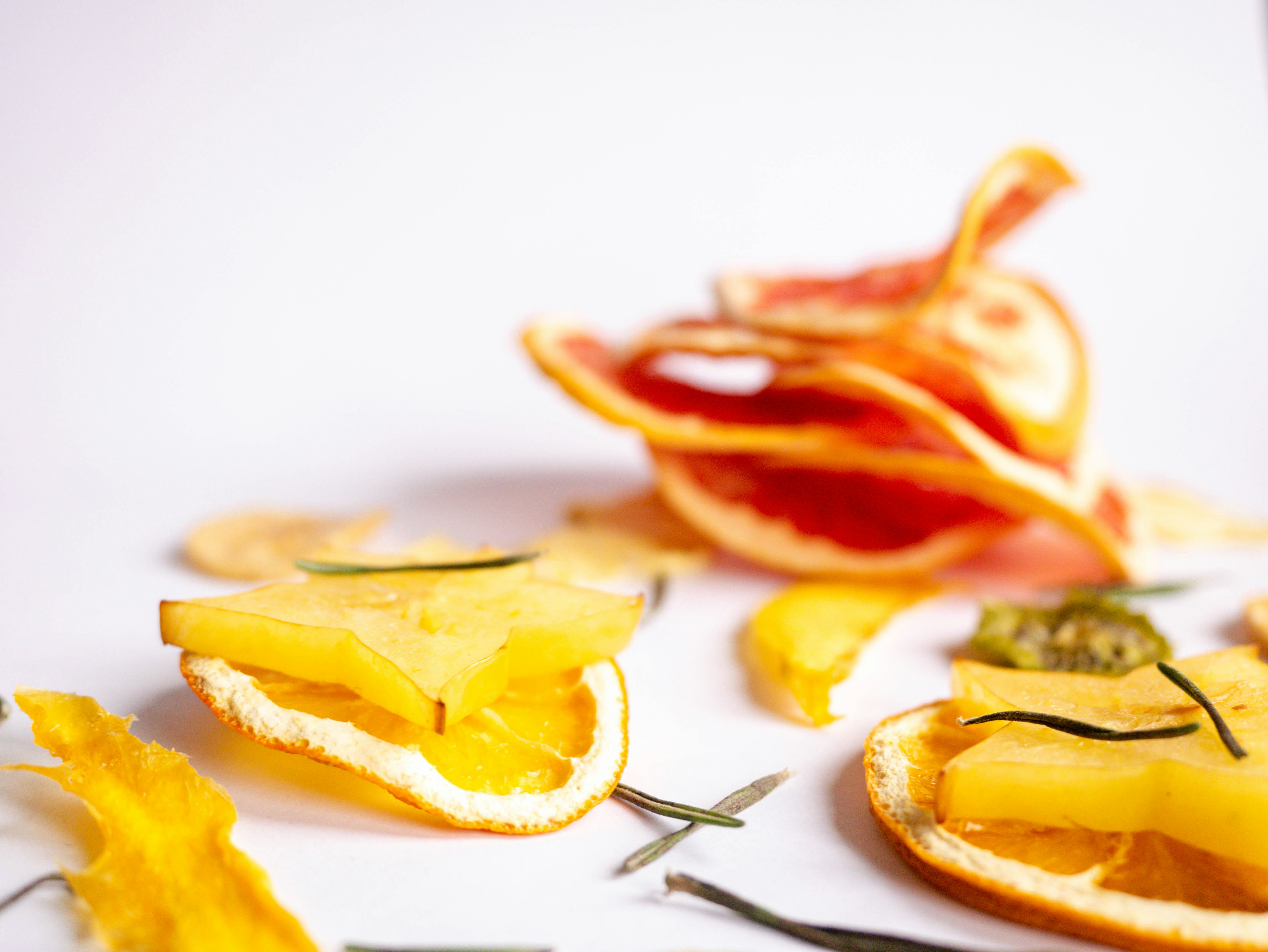
Candying is not a quick process. It never has been. It takes days, sometimes weeks. The fruit is immersed several times in syrups of increasing concentration. You wait. It is checked. The process is repeated. It is a technique that teaches patience. This is one of the reasons why candied fruit has naturally found its way into traditional leavened cakes. panettone, colomba, and holiday desserts are not meant for everyday consumption. They are made for special occasions. And for these occasions, ingredients that took time to prepare were chosen, because time was part of their value.
One of the most common misconceptions is that candied fruit is just sugar. In reality, good candied fruit is first and foremost fruit. Its value lies in the raw material, not in the syrup. A high-quality candied orange peel retains its aroma, texture, and a slight underlying bitterness. It should not be sticky, it should not be transparent like glass, and it should not taste only sweet. Good candied fruit still tells the story of the fruit from which it comes. When this is not the case, it is not the fault of the candied fruit, but of how it was made.
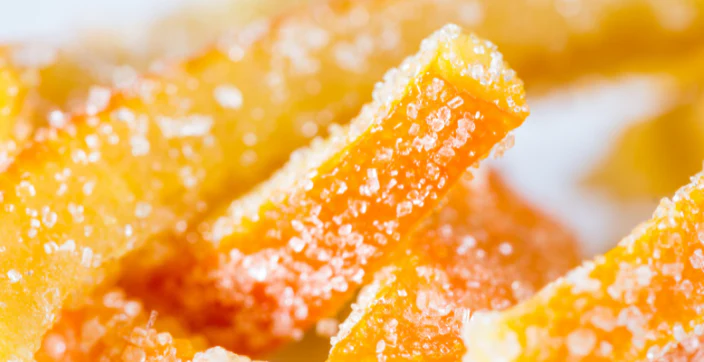
Historically, candied fruit also had a specific taste function: to create balance. In desserts rich in butter, eggs, and flour, candied fruit brought freshness, acidity, and a necessary contrast. Without candied fruit, many traditional desserts would be flat and monotonous. Candied citrus peel not only sweetens, it lightens, opens up the flavor, and cleanses the palate. It is a counterpoint, not a filler. This is particularly true in long-rise leavened products, where fermentation develops complex notes. Candied fruit enters into dialogue with the yeast, it does not cover it up.
The modern aversion to candied fruit stems from a collective bad experience. For decades, the industry has produced standardized, hard, overly sweet candied fruit devoid of character. Candied fruit made to last, not to taste good. This version has erased the memory of what a well-made piece of candied fruit truly is. But eliminating candied fruit doesn’t solve the problem. It simply sidesteps it. A panettone candied fruit can be good, of course. But a panettone excellent candied fruit is complete. It tells a longer, deeper story.
Candying means choosing not to simplify. It means accepting a long, delicate, and difficult-to-scale process. It is a cultural choice, not just a technical one. In the Mediterranean tradition, candying was a way to honor the fruit, not to mask it. Nothing was wasted. Even the peels—what seemed marginal—became precious. This mindset is deeply contemporary, even though it originated centuries ago. Recovering value from what remains. Transforming without erasing. Preserving without distorting. Moreover, not all candied fruits are the same. They vary depending on the fruit, the place, and the variety. An orange peel from the Sibari Plain does not tell the same story as an anonymous orange. Candied fruit becomes a vehicle for the territory. For this reason, in high-quality artisanal products, the choice of candied fruit is central. It is not an interchangeable ingredient. It is a signature. A recognizable identity.
If you want to experience what this commitment truly means, discover our artisanal Calabrian panettone made with DOP and IGP ingredients — produced in small batches, with candied fruit made in-house.
In panettone , candied fruit isn’t just an optional addition. It’s part of the dessert’s narrative structure. Without it, panettone a vital element. The ideal bite alternates between softness and firmness, sweetness and freshness. The candied fruit introduces a pause, a change of pace. It is what makes each slice different from the last. In artisanal leavened products, candied fruit is often custom-made, with lower sugar concentrations, longer processing times, and carefully selected fruits. The result is an ingredient that does not overpower, but complements.
.jpg)
Good candied fruit can be recognized by its texture, aroma, and taste. It should not be sticky or hard. It should smell of citrus, not sugar. When bitten, it should yield slowly, not break. When these elements are present, even those who think they don't like candied fruit often change their minds. Because it was never the candied fruit that was the problem, but its quality.
Using candied fruit today is a deliberate choice. It means upholding an ancient technique. It means believing that taste can be cultivated, not merely indulged. It means honoring the legacy of the dessert, not rewriting it for the sake of convenience. In a world that tends to eliminate what divides us, candied fruit endures. Not out of defiance, but out of consistency. Because it is part of an ancient language that is still worth speaking.
Ultimately, candied fruit isn't just used to make a dessert taste better. It's used to make it more authentic. It conveys an idea of cooking that embraces time, complexity, and layering. A dessert with candied fruit is no longer simple, it is more profound. And those who choose to use it choose to tell a longer story, one made up of hands, seasons, and waiting. This is why candied fruit still exists. This is why it continues to be used. Despite everything. Precisely because, when it is done well, it does not demand to be liked immediately. It only asks to be understood.
That’s exactly what we do in our panettone with organic candied orange peel from the Sibari Plain — hand-selected peels, candied in-house, that still taste like oranges.


Italo is an artisanal yeast-leavened pastry made with organic candied orange peel from the Sibari Plain and dried raisins soaked in " Passito di Saracena." A Calabrian specialty with an intense aroma and an elegant flavor.


Wheat Flour · Butter · Water · Pasteurized Egg Yolks · Fresh sourdough starter · Natural wheat yeast (powder) · Dried raisins made from “Mazzarrone IGP Table Grapes” · Candied orange peel from the Sibari Plain · Organic orange paste · “Rocca Imperiale IGP Lemon” paste · Organic honey · Sugar · Salt
A premium dough made with Type 0 flour and soft wheat sourdough starter, enriched with cream butter and pasteurized egg yolk for a velvety softness. Dried raisins made from “Mazzarrone IGP Table Grapes” combine with candied zest and organic orange paste from the Sibari Plain, creating a refined citrus aroma. The balanced sweetness of the sugar blends with notes of natural vanilla, while a touch of salt enhances every nuance. A masterpiece of tradition and carefully selected ingredients.
Stories from the Lab
From the Calabrian region to artisanal craftsmanship, from the secrets of natural yeast to the PDO ingredients that make our panettone unique in Italy: our blog shares what the packaging can’t convey. Read to understand, learn to make better choices.
.jpg)
In recent years, panettone become much more than just a Christmas dessert. It’s a topic of debate, a statement of style, a declaration of intent. Today, people talk about it all year round, comparing its rise, ingredients, and aromas, and even traveling to taste it. Yet, precisely because panettone become part of everyday conversation, recognizing a true panettone has never been more important.
.jpg)
There are products that are not created to impress, but inevitably end up doing so. Dottati del Cosentino PDO figs belong to this rare category: fruits that are simple only in appearance, capable of encapsulating centuries of history, landscape, agricultural culture, and Mediterranean flavor. They are not a recent fad or a modern interpretation of tradition. Rather, they are a continuity, a thread that links ancient Enotria to today's Calabria.
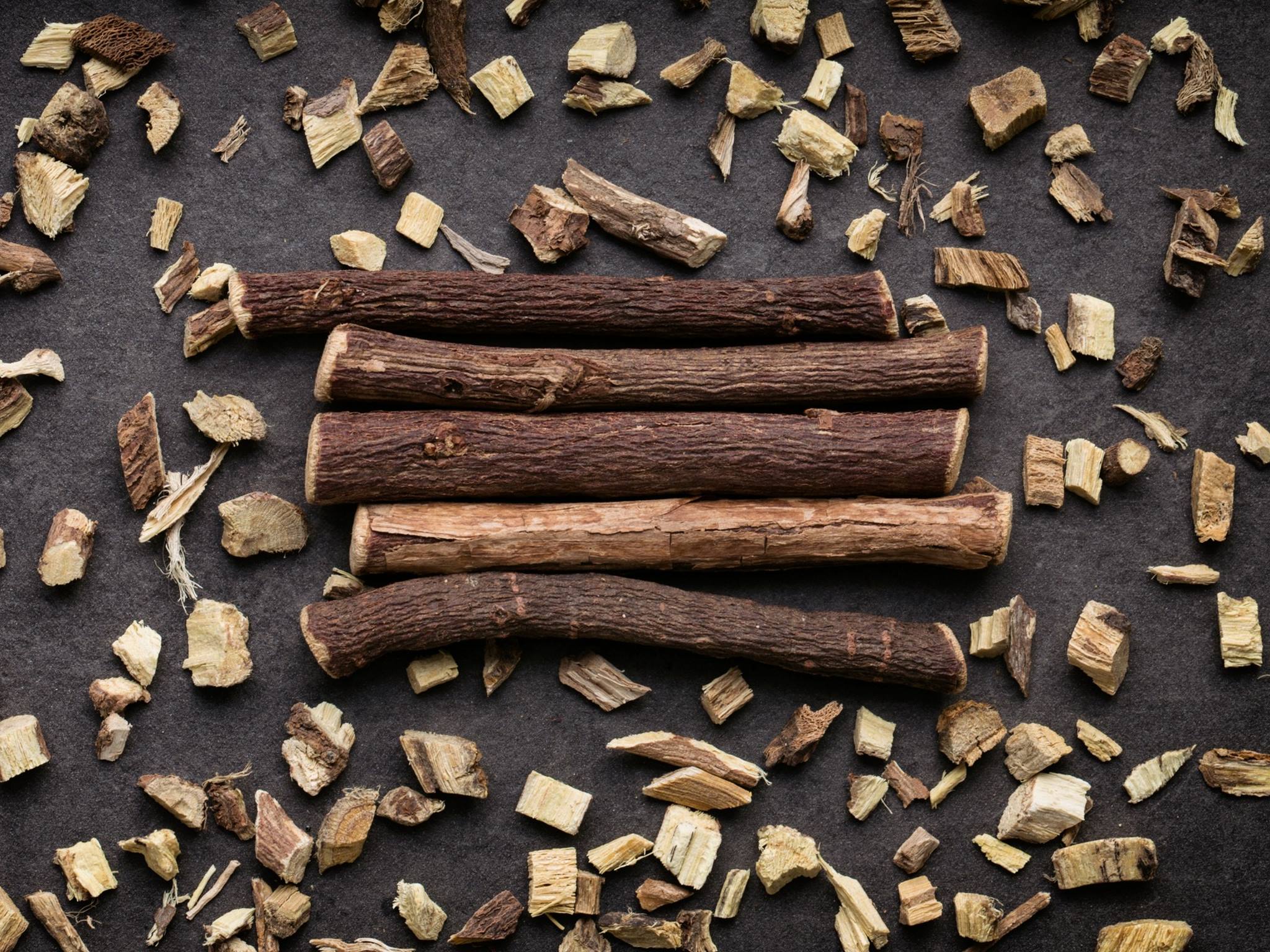
In Calabria, licorice has never been just an ingredient. It is a symbol, a scent of childhood, a piece of the agricultural history of ancient Enotria. Amidst the warm winds of the Ionian Sea and the clay soils that retain the sun, Glycyrrhiza glabra finds its ideal conditions. It does not grow everywhere with the same vigor, which explains why Calabrian root is considered the best in the world: it has an unparalleled concentration of aromas and natural sweetness.




.webp)


 Created by Dopamine Studio
Through November 15, every panettone order ships at our expense anywhere in Italy. From our workshop in Corigliano-Rossano to your table, with no shipping costs.


