How much does a handcrafted " panettone " cost, and what factors go into the price?
In 2025, the “ panettone ” from Milanese pastry shops reached an average price of 44.74 euros per kilo, compared to 8.58 euros for the industrial “ panettone ” ( Panettone Observatory by Maiora Solutions, via Il Giorno). The difference can be explained by three factors: the raw materials, which account for nearly half the price; the labor, which takes two or three days to make a sourdough “ panettone ”; and the packaging, which alone accounts for about one-fifth of the cost.
Reading Time
8
Min
Every December, the same question comes up again—whether in front of a pastry shop’s window or on a bakery’s website: Why does a “ panettone ” cost more than the one at the supermarket? The answer lies in a detailed breakdown, made up of butter, egg yolks, candied fruit, hours of labor, and cardboard. Let’s break it down item by item, using the available figures and without beating around the bush.
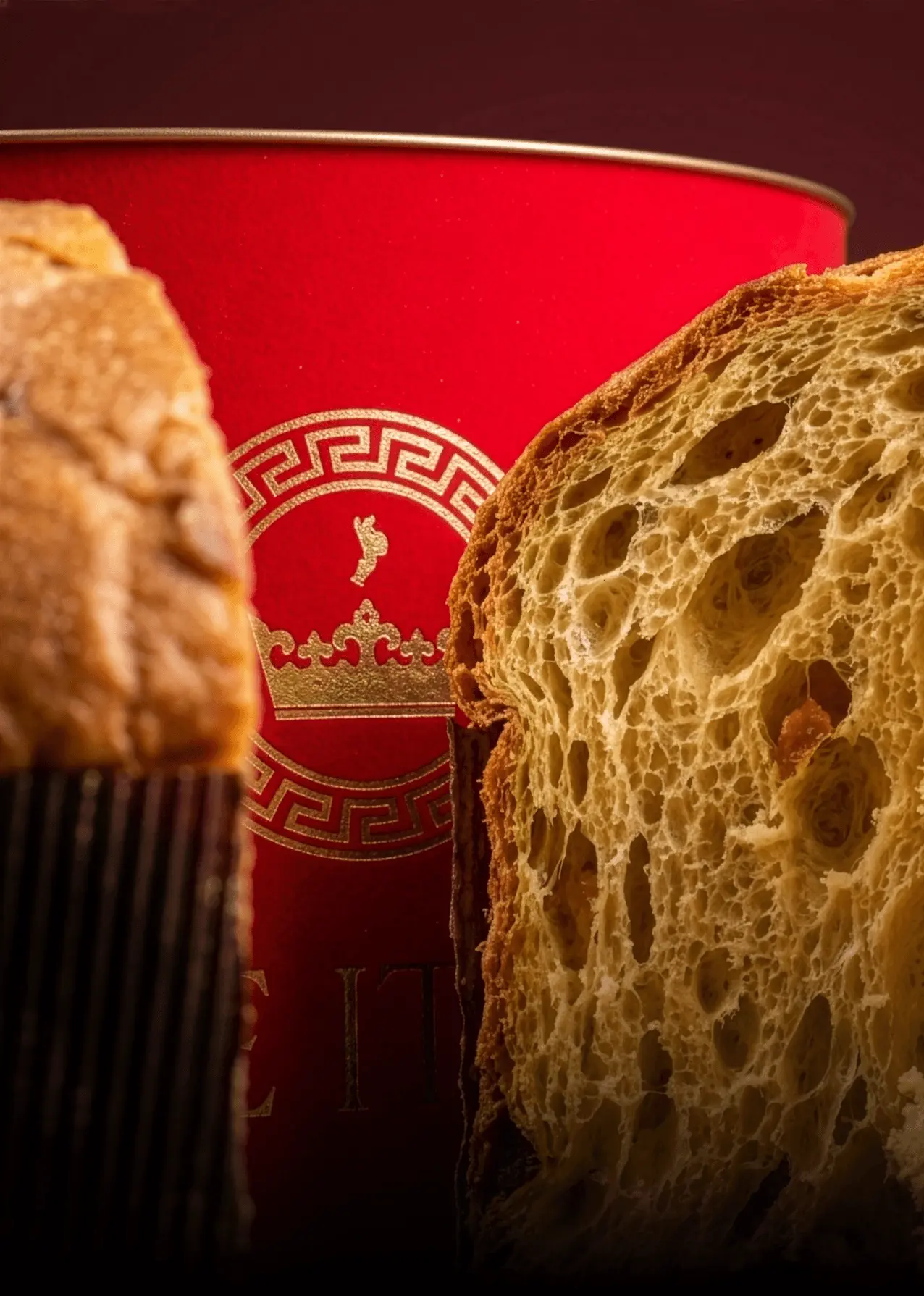
Panettone A whole Italo next to its gift box
How much does a handcrafted " panettone " cost today?
The most widely cited source is the “ Panettone ” Observatory by Maiora Solutions, which tracks prices at pastry shops in Milan every year. In 2025, the average price reached 44.74 euros per kilo, up from 36.86 euros in 2021—a 21.4% increase over four years. The most expensive items cost 50 euros per kilo, while the most affordable were just under 40 (Panorama).
Other surveys confirm this order of magnitude. The Scatti di Gusto tasting panel reported that the average price of artisanal “ panettone ” is 41 euros, compared to branded panettone sold in supermarkets, which remains under 20 euros (Scatti di Gusto). Dissapore notes that in 2020 the average was around 30 euros and that today 40 euros represents the new starting point (Dissapore).
The outlook for Christmas 2026 is stable: according to the Mastro Panettone competition observatory, 58% of the artisans surveyed said they would not raise their prices (La Sicilia).
When comparing two products, the most important factor is still the price per kilogram. A 750-gram package priced at 38 euros costs more than a one-kilogram package priced at 48 euros.
panettone 's recipe is mandated by law
In Italy, the name “panettone ” is protected by the Ministerial Decree of July 22, 2005, updated in 2017. The decree specifies the mandatory ingredients for the dough and the minimum quantities: at least 16% butterfat, at least 4% egg yolk, at least 20% raisins and candied citrus peel combined, and natural yeast made from sourdough. No fats other than butter are permitted in the base dough (Il Fatto Alimentare).
These thresholds apply to everyone, including the industry. A 6-euro “ panettone ” and a 45-euro one both comply with the same standard: the difference lies in everything above the minimum—that is, how much extra butter, which egg yolks, which candied fruit, and how much time is allowed for the dough to rest. The decree also allows for certain optional ingredients, including emulsifiers such as mono- and diglycerides of fatty acids, which help with preservation and shorten processing time.
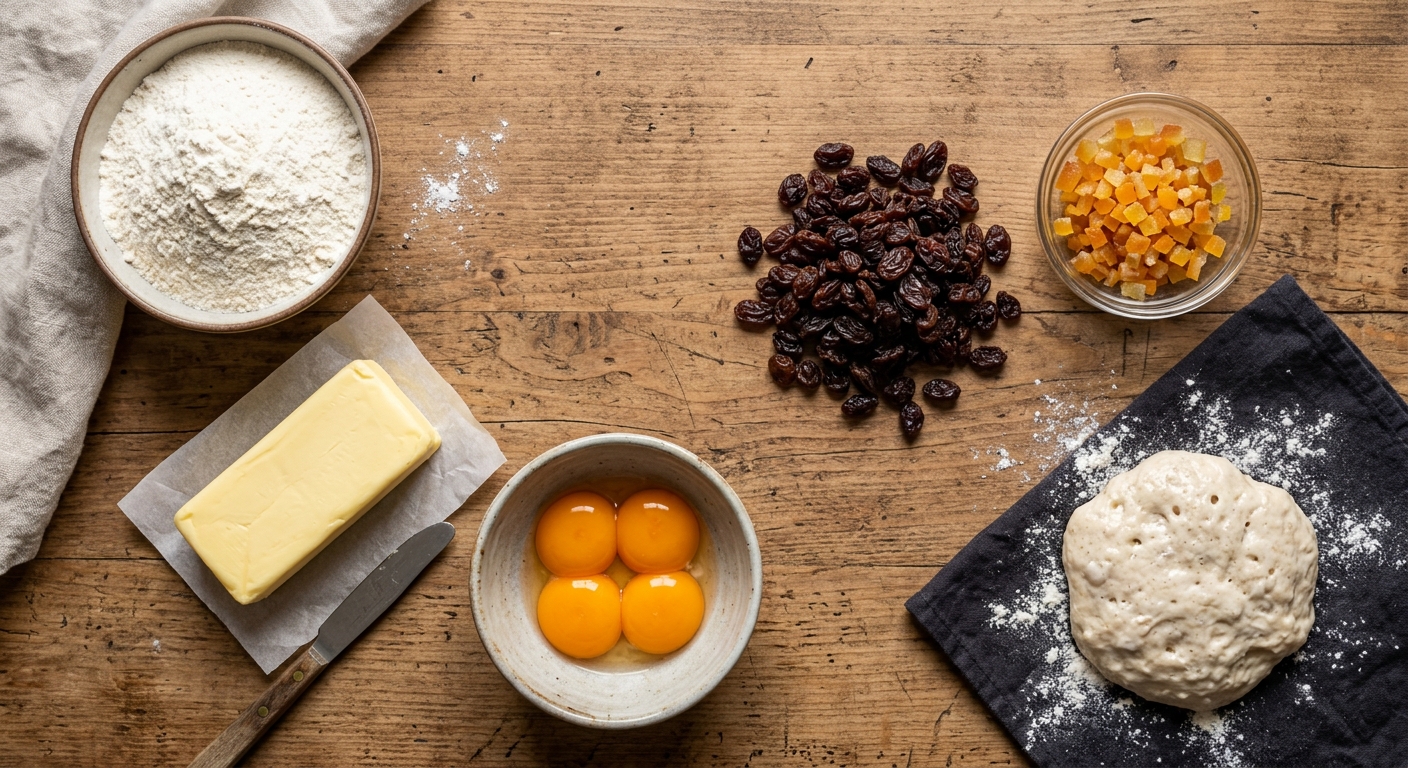
Ingredients for " panettone": flour, butter, egg yolks, raisins, candied fruit, and sourdough starter
The raw material: the heaviest component
Dissapore tried to break down the cost of a “ panettone ” that sells for 45 euros per kilo: about 20 euros for raw materials, 15 for production and labor, and 10 for packaging (Dissapore). Nearly half of the price, therefore, goes toward the ingredients.
They are also the ingredients most vulnerable to market fluctuations. The price of egg yolks rose from 4 euros per kilo in 2024 to 8.2 euros in 2025, driven by avian influenza and strong demand from the United States. Butter experienced an even more abrupt cycle: an 82.8% increase in wholesale prices in 2024 (QuiFinanza), followed by a sharp decline in the first months of 2026, with a 20.3% drop in prices in January alone (Unioncamere, wholesale price index). A small-scale production facility buys at market prices, without the annual contracts and hedging strategies available to a large industrial group.
Then there is the selection of individual raw materials. An ingredient with a protected designation of origin costs more because it comes from a specific region, follows specific production guidelines, and undergoes inspections throughout the entire supply chain. In our panettone, this selection includes specific names: Calabrian Clementines (PGI), Calabrian Licorice (PDO), and Dottato variety figs from Cosenza (PDO). The “ Passito di Saracena,” a Slow Food Presidium in the Pollino region, helps revive the “ Panettone Italo” raisin variety. The candied fruits are prepared in-house, starting from whole fruits.
Candied fruit deserves special attention. The ready-made variety, purchased from industrial suppliers, is inexpensive and has a consistent flavor. Making your own candied fruit involves preparing syrups of increasing concentration over several days, with waste and lower yields. The difference is evident when you cut into it—in the texture of the peel and the aroma that lingers inside each slice.
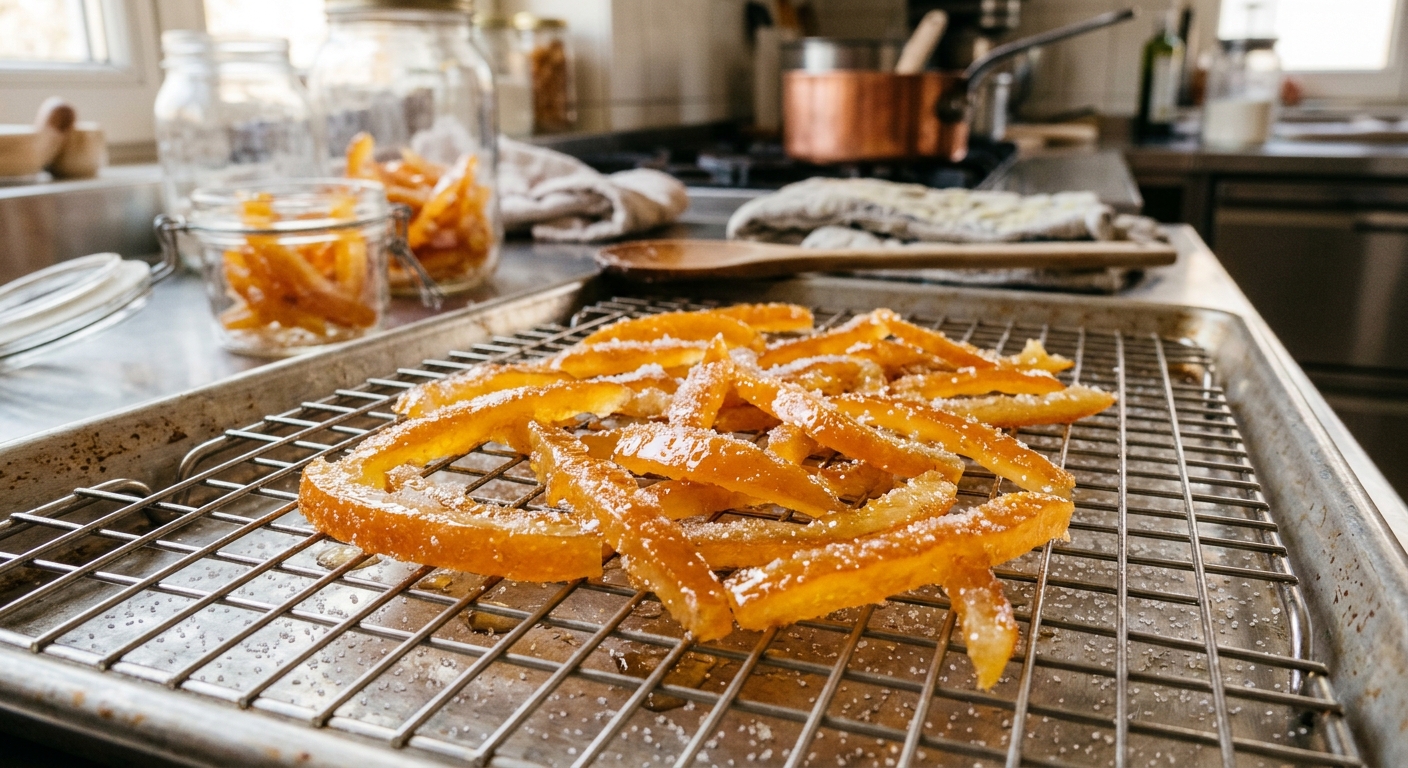
Candied orange peels at the U Re Italo workshop in Corigliano-Rossano
Time: two or three days for a panettone
The sourdough starter requires preparation that begins before the actual dough is made. It is refreshed several times, at intervals of a few hours, until it reaches the strength needed to lift a dough rich in butter, egg yolks, and sugar. This is followed by the first dough, which rises overnight, for between 12 and 14 hours. The second batch of dough incorporates the remaining ingredients and the fruit; the dough is then divided, rounded by hand, placed in molds, and left to rise for several more hours.
After baking, the “ panettone ” is skewered and turned upside down for several hours to prevent the still-warm structure from collapsing under its own weight. Only then can it be packaged. In our workshop in Corigliano-Rossano, the entire process takes more than 48 hours.
This process cannot be rushed. The sourdough starter reacts to the temperature, humidity, and the day’s flour, and the baker must pay close attention to it: a dough that hasn’t reached the right volume must be allowed to rise, even when the clock suggests otherwise. Each batch requires attention and skill, and any batch that fails inspection becomes waste. This is the part of the price that remains hidden on the label.
Packaging and shipping: one-fifth of the price
Packaging accounts for about 20% of the purchase price on average. The manufacturers interviewed by Dissapore report costs ranging from 3 to 10 euros per item, depending on whether it is a paper box, a set consisting of a box, tray, and shopping bag, or a collectible tin (Dissapore).
For those who sell online, shipping is an additional consideration. A “ panettone ” will only arrive in good condition if it’s protected from bumps and crushing, with outer packaging designed for the courier in addition to the gift wrapping. Those who order for a recipient far away also pay for this extra care, which determines whether the gift will arrive intact.
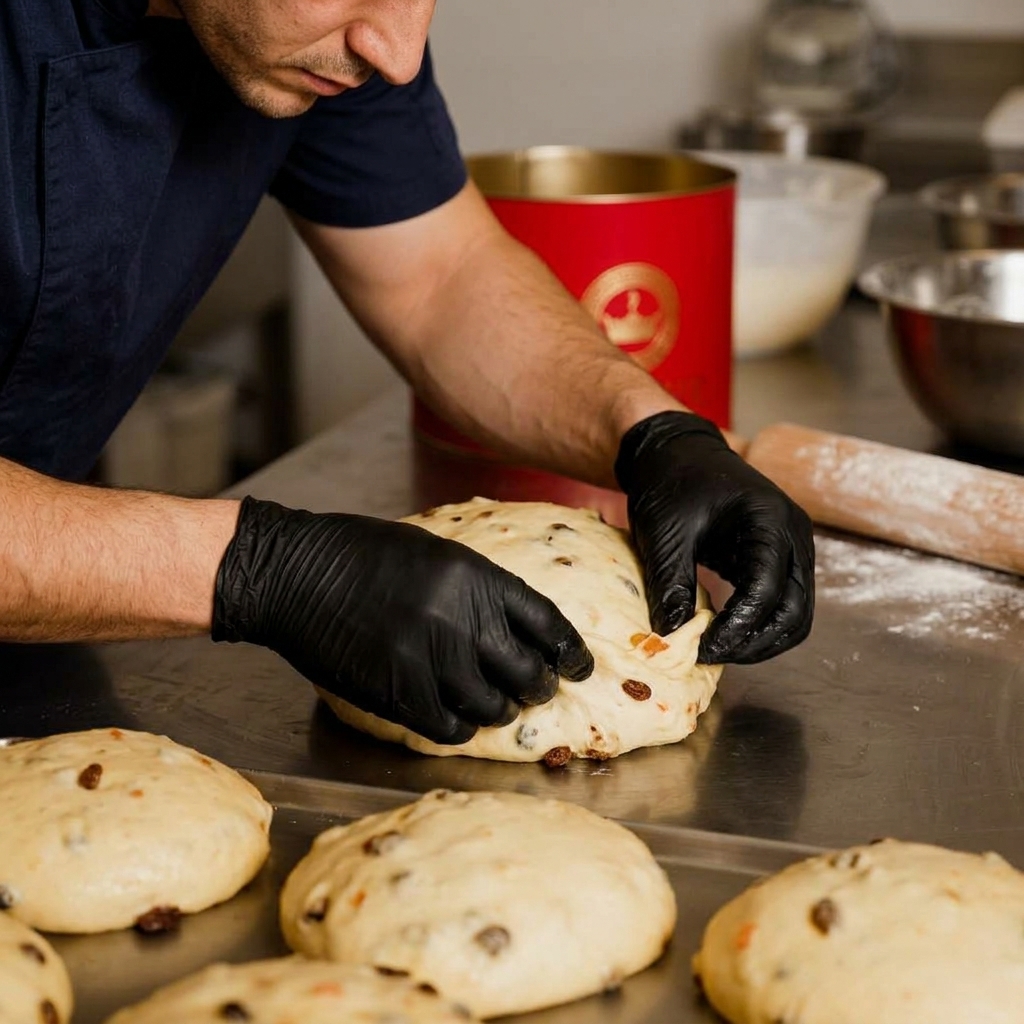
panettone dough rolled out by the pastry chef's hands
"Artisanal": What Will the Term Mean Starting in 2026?
Effective April 7 , 2026, the use of the term “artisanal” is governed by Law No. 34 of March 11, 2026, the annual law on small and medium-sized enterprises. Article 16 restricts the use of the term to businesses registered in the Register of Artisan Businesses that directly produce what they sell, with penalties equal to 1% of turnover and a minimum of 25,000 euros per violation. The Ministry of Enterprise has clarified cases of doubt in a frequently asked questions page.
The regulation protects the business’s status but leaves the product unregulated: it does not establish requirements regarding ingredients, proofing, timing, or the use of semi-finished products (Dissapore). The label indicates who made the panettone. As for how it was made, you’ll have to look elsewhere.
How to Check the Price Before Buying
A few quick checks can help you determine whether the price matches what's inside the box:
The price per kilogram. It's the only fair way to compare different sizes.
The order of the ingredients. They are listed in descending order of quantity: butter and egg yolks at the top are a good sign.
Emulsifiers. The presence of mono- and diglycerides of fatty acids is permitted and indicates that the product has been processed with a focus on long-term preservation.
The origin of the fruit. Designations such as DOP and IGP must be written out in full; a generic term like “candied orange peel” doesn’t tell us much.
Yeast. A reputable bakery is happy to provide information on sourdough starter and the specified times.
Seasonality. A “ panettone ” produced in limited batches in the weeks leading up to Christmas arrives on your table closer to the day it was baked.
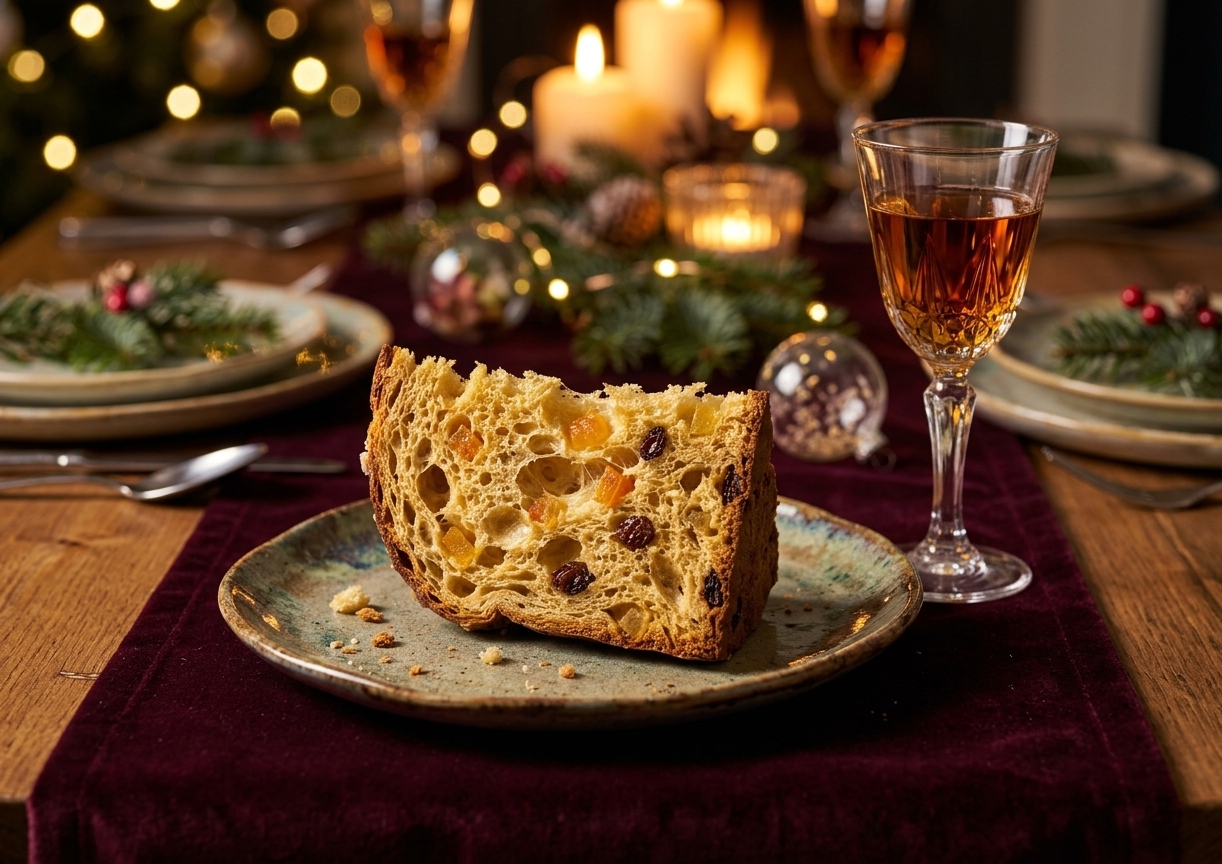
A slice of Italo " Panettone " with a honeycomb texture, raisins, and Passito di Saracena
The Italo " Panettone " and Its Price
The Italo " Panettone " is made in our bakery in Corigliano-Rossano, Calabria, in small batches that sell out every year before Christmas. Raisins sourced from the “ Passito di Saracena,” orange candies made in-house, sourdough starter, and over two days of preparation: its price reflects these components, one by one. We sell it exclusively through our website and at our store in Corigliano-Rossano, with shipping available throughout Italy and to 22 European countries.
Italo
Best-selling
Italo is an artisanal yeast-leavened pastry made with organic candied orange peel from the Sibari Plain and dried raisins soaked in " Passito di Saracena." A Calabrian specialty with an intense aroma and an elegant flavor.
Wheat Flour · Butter · Water · Pasteurized Egg Yolks · Fresh sourdough starter · Natural wheat yeast (powder) · Dried raisins made from “Mazzarrone IGP Table Grapes” · Candied orange peel from the Sibari Plain · Organic orange paste · “Rocca Imperiale IGP Lemon” paste · Organic honey · Sugar · Salt
Preparation
A premium dough made with Type 0 flour and soft wheat sourdough starter, enriched with cream butter and pasteurized egg yolk for a velvety softness. Dried raisins made from “Mazzarrone IGP Table Grapes” combine with candied zest and organic orange paste from the Sibari Plain, creating a refined citrus aroma. The balanced sweetness of the sugar blends with notes of natural vanilla, while a touch of salt enhances every nuance. A masterpiece of tradition and carefully selected ingredients.
Stories from the Lab
The stories behind every flavor
From the Calabrian region to artisanal craftsmanship, from the secrets of natural yeast to the PDO ingredients that make our panettone unique in Italy: our blog shares what the packaging can’t convey. Read to understand, learn to make better choices.
panettone s as Christmas Gifts: A Guide to a Gift That Lasts
Every December, it’s time to make a choice again. On a colleague’s desk, in the entryway of your home, under the tree at a distant relative’s house: the “ panettone ” is the most commonly exchanged Christmas gift in Italy—and for that very reason, the one it’s easiest to get wrong. An ordinary “ panettone ” is opened, sliced, and forgotten by St. Stephen’s Day. The one chosen with care is still remembered in February, when someone asks again where you found it.
This guide brings together everything you need to make an informed choice when selecting a “ panettone ” as a gift: what the law requires, how to read a label, why the origin of the ingredients matters, when to order, and how to ensure the gift makes it safely to the recipient’s table.
Why panettone uses candied fruit, and why not all candied fruit is the same
Today, candied fruit divides opinion. Some people seek it out, others avoid it, and still others consider it an unnecessary detail. Yet before becoming a controversial ingredient, candied fruit was a necessity, an achievement, a sign of civilization. Understanding why it is used means going back much further than a recipe; it means entering into a story of time, preservation, travel, and waiting.
How to Spot a Genuine panettone : 5 Tell-Tale Signs
In recent years, panettone become much more than just a Christmas dessert. It’s a topic of debate, a statement of style, a declaration of intent. Today, people talk about it all year round, comparing its rise, ingredients, and aromas, and even traveling to taste it. Yet, precisely because panettone become part of everyday conversation, recognizing a true panettone has never been more important.






 Created by Dopamine Studio